Resources

A space where we collect and share resources both produced within TACTT and elsewhere

Resources developed by TACTT

Trans affirming therapist checklist
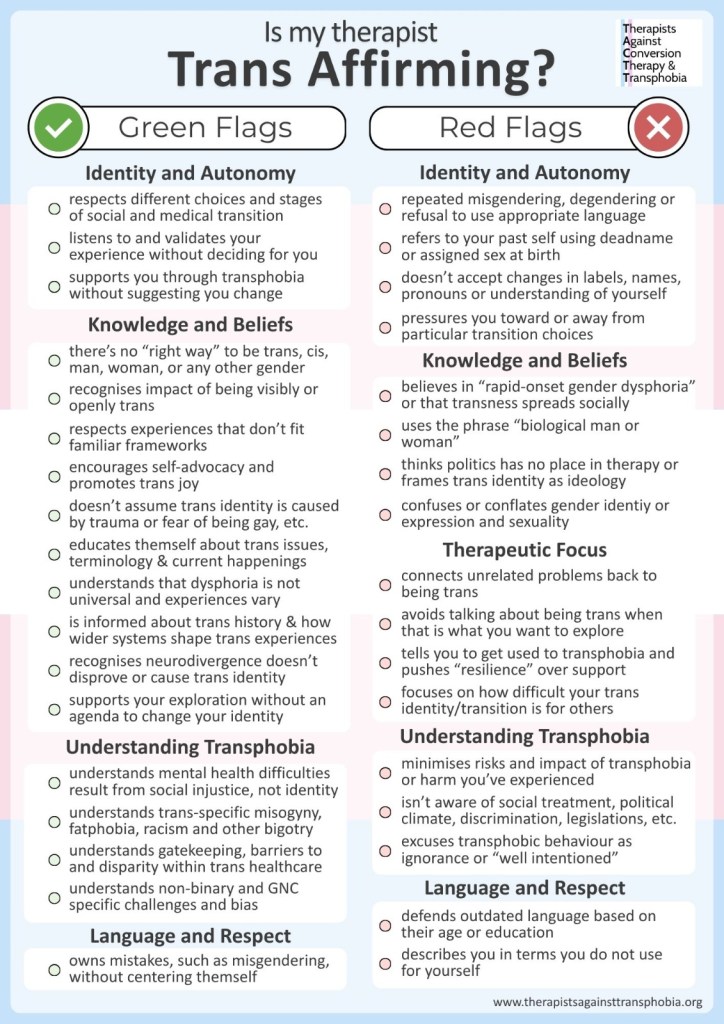
A set of prompts and questions for anyone looking to understand if their therapist is trans-affirming. The image is in two columns - red flags and green flags. The resource is created by “therapists against conversion therapy and transphobia” and at the bottom is the TACTT website: www.therapistsagainsttransphobia.org. The image text reads: Heading: Is my therapist Trans Affirming? Column 1: Green Flags Subheading 1: Identity and Autonomy. Respects different choices and stages of social and medical transition. Listens to and validates your experience without deciding for you. Supports you through transphobia without suggesting you change. Subheading 2: Knowledge and Beliefs. There’s no “right way” to be trans, cis, man, woman, or any other gender. Recognises impact of being visibly or openly trans. Respects experiences that don’t fit familiar frameworks. Encourages self-advocacy and promotes trans joy. Doesn’t assume trans identity is caused by trauma or fear of being gay, etc. Educates themself about trans issues, terminology & current happenings. Understands that dysphoria is not universal and experiences vary. Is informed about trans history & how wider systems shape trans experiences. Recognises neurodivergence doesn’t disprove or cause trans identity. Supports your exploration without an agenda to change your identity. Subheading 3: Understanding Transphobia. Understands mental health difficulties result from social injustice, not identity. Understands trans-specific misogyny, fatphobia, racism and other bigotry. Understands gatekeeping, barriers to and disparity within trans healthcare. Understands non-binary and GNC-specific challenges and bias. Subheading 4: Language and Respect. Owns mistakes, such as misgendering, without centering themself. Column 2: Red Flags Subheading 1: Identity and Autonomy. Repeated misgendering, degendering or refusal to use appropriate language. Refers to your past self using deadname or assigned sex at birth. Doesn’t accept changes in labels, names, pronouns or understanding of yourself. Pressures you toward or away from particular transition choices. Subheading 2: Knowledge and Beliefs Believes in “rapid-onset gender dysphoria”or that transness spreads socially. Uses the phrase “biological man or woman”. Thinks politics has no place in therapy or frames trans identity as ideology. Confuses or conflates gender identity or expression and sexuality. Subheading 3: Therapeutic Focus Connects unrelated problems back to being trans. Avoids talking about being trans when that is what you want to explore. Tells you to get used to transphobia and pushes “resilience” over support. Focuses on how difficult your trans identity/transition is for others. Subheading 4: Understanding Transphobia Minimises risks and impact of transphobia or harm you’ve experienced. Isn’t aware of social treatment, political climate, discrimination, legislations, etc. Excuses transphobic behaviour as ignorance or “well intentioned”. Subheading 5: Language and Respect Defends outdated language based on their age or education. Describes you in terms you do not use for yourself.

Read more about the checklist here or download/ share:
Pdf
Jpg
Png

Alt text – please use this when posting the images on social media for people using screen readers.

Resources we recommend from elsewhere

Course: Working therapeutically with trans (including non-binary) people: What does ‘good’ look like?
https://www.open.edu/openlearncreate/course/view.php?id=8653
Online course exploring what is involved for a psychological therapist or counsellor to work constructively and supportively with a client who is trans, given the history of trans identities being pathologised. This course was developed with and approved by the British Association for Counselling and Psychotherapy (BACP). The collection this course is part of includes materials on the current social and legal context for trans adults and the implications for healthcare, a topic of relevance to all the courses in the collection.”

Trans Allies Together – a community and set of tools from Gendered Intelligence: https://genderedintelligence.co.uk/page/trans-allies-together

Rewriting the rules is a site of free articles, books, zines and resources. There’s a free book on relationships and a how to build your own relationship plan

Good Practice across the Counselling Professions 001: Gender, sexual,
and relationship diversity (GSRD) – from BACP: https://www.cosrtlearn.org.uk/wp-content/uploads/2022/06/MJB_BACP_GSRD.pdf